

A hearing test tells you exactly where you stand.
A hearing assessment at Emirates Audiology Centre uses pure-tone audiometry, speech audiometry, tympanometry and otoacoustic emission testing to establish whether hearing loss is present, and its degree and type. It takes about an hour, it is painless, results are explained the same visit, and it is available in Abu Dhabi and Al Ain.
It takes place in a quiet room, it is completely painless, and by the end of it you will know precisely which sounds you hear well and which you do not — in each ear, measured rather than guessed.
- Since 1996
- Licensed audiologists
- Results the same visit
- Thiqa & Daman accepted
- Abu Dhabi & Al Ain
What happens during your hearing test
Allow about an hour. Nothing in the assessment is uncomfortable, and nothing enters the ear beyond a soft probe tip.
- Case history — what you have noticed, when it started, and where it troubles you most
- Ear examination — a look inside the ear canal and at the eardrum
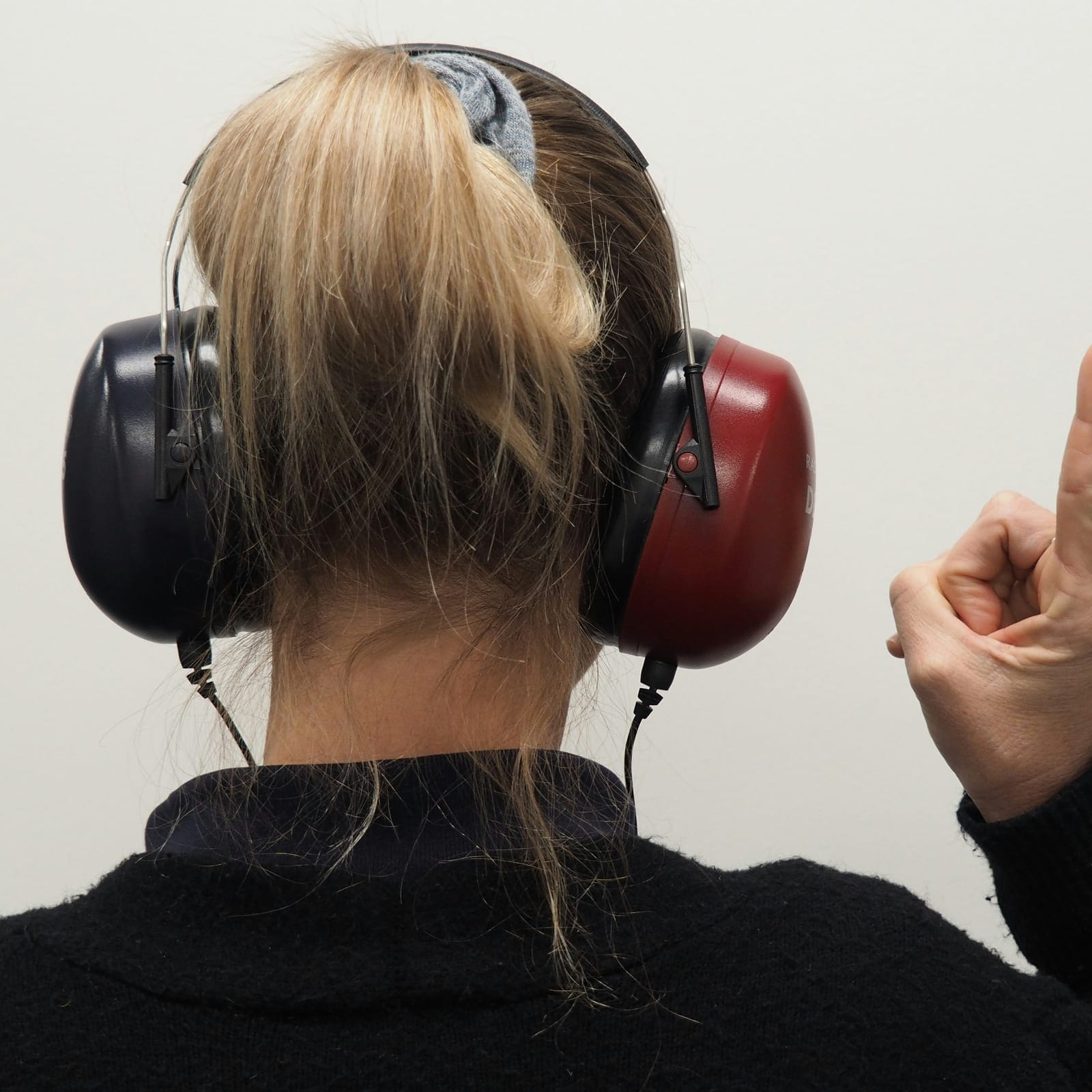
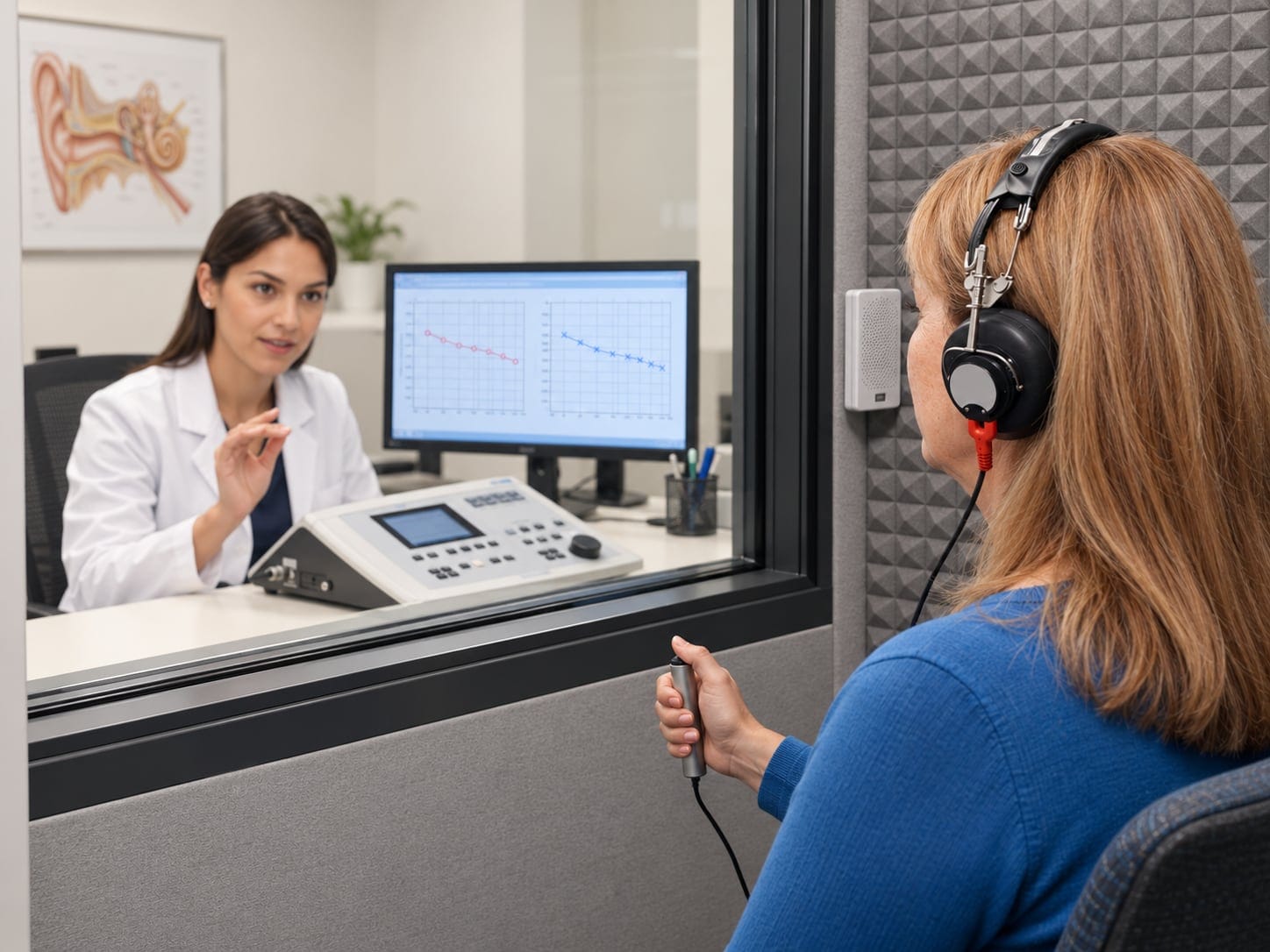
- Pure-tone audiometry — the quietest sounds you can hear across the speech frequencies, measured in each ear
- Speech audiometry — not only whether you hear words, but whether you understand them
- Tympanometry — how your eardrum and middle ear are working
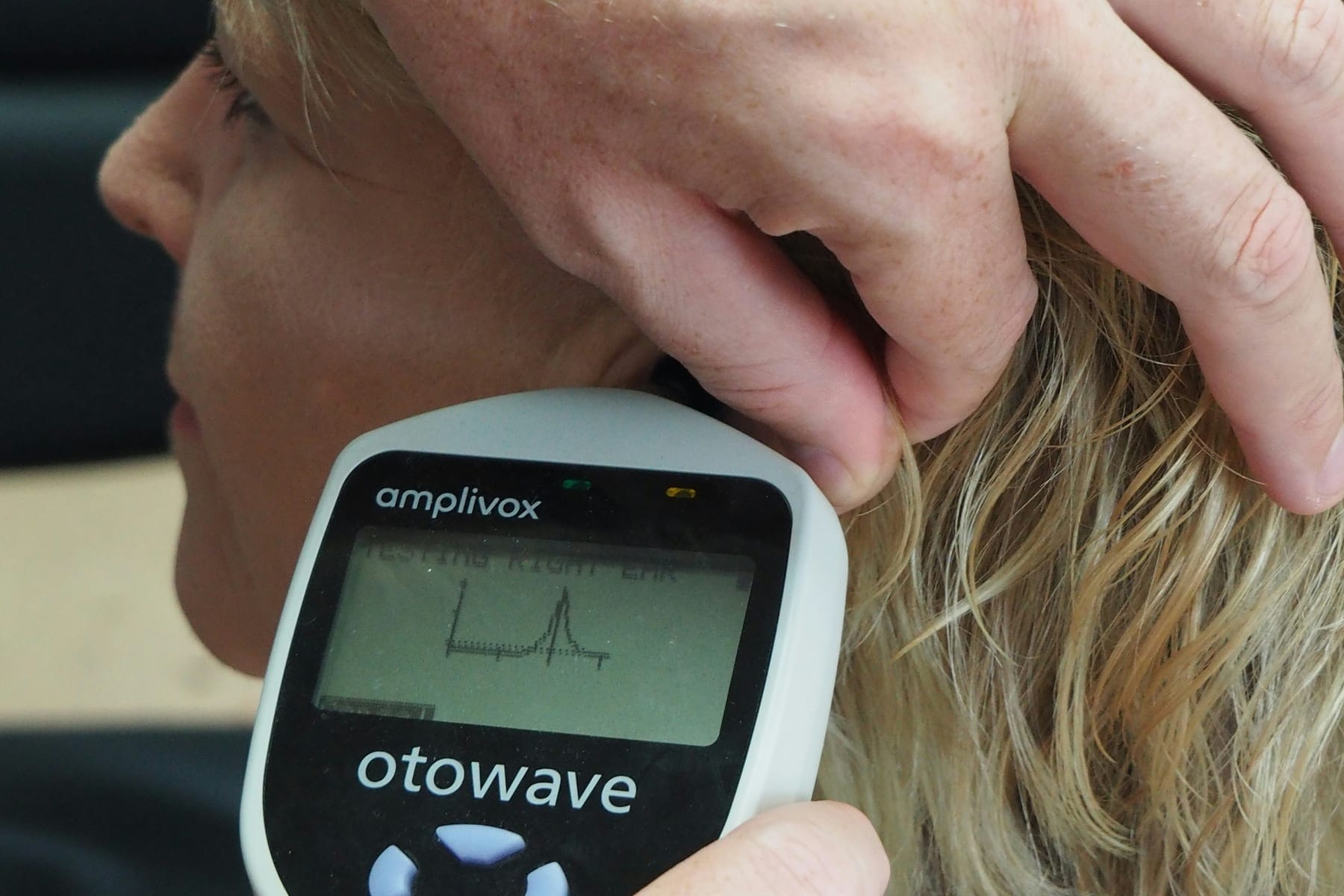
- Otoacoustic emissions (OAE) — how the inner ear responds, used for children and for detailed assessment
Your audiogram is explained to you before you leave, along with a clear recommendation. We also offer hearing screening — a shorter check that establishes whether a full diagnostic assessment is needed.
What a hearing test can identify
An audiometric test establishes whether hearing loss is present and, if it is, its degree and its type. That distinction matters more than most people expect, because the types are treated very differently.
- Conductive hearing loss — the outer or middle ear, often treatable
- Sensorineural hearing loss — the inner ear or the hearing nerve
- Mixed hearing loss — both together
- Unilateral or asymmetric hearing loss — one ear affected, or one noticeably worse, which sometimes needs medical investigation
- Age-related hearing loss — a gradual pattern the audiogram makes visible
- Noise-induced hearing loss — a distinctive dip caused by exposure
It also creates a baseline. If your hearing changes in five years, we will know by exactly how much — because we have the original chart to measure against.
Signs it is time to have your hearing tested
- Frequently asking people to repeat themselves
- Turning the television volume up
- Difficulty understanding speech in noisy places
- The feeling that people are mumbling
- Difficulty following group conversations
- Difficulty hearing on the telephone
- One ear hearing better than the other
- Ringing or buzzing in the ears
- Fullness or pressure in the ear
- Difficulty hearing high-pitched sounds
- Difficulty understanding children’s or women’s voices
- Avoiding conversations or social situations because of hearing difficulty
- Sudden or rapidly worsening hearing
Recognise two or more of these? That is reason enough to be tested. You are not wasting anyone’s time.
A hearing test does not prevent hearing loss. Finding it early is what protects you.
The test itself changes nothing. What it does is show the risk while there is still something to be done about it. Depending on what we find, that may mean:
- Hearing protection
- Reducing excessive noise exposure
- Medical or ENT evaluation
- Treatment of certain ear conditions
- Ongoing monitoring of your hearing
- Hearing rehabilitation
- A hearing aid, at the point one will genuinely help

Conditions where hearing should be monitored
Hearing should be checked regularly, even without symptoms, for adults with any of the following:
- Diabetes
- Cardiovascular disease
- Kidney disease
- A history of stroke
- Chronic ear disease
- Ménière’s disease
- Otosclerosis
- Tinnitus
- Significant noise exposure at work
- Head trauma
- Use of medication known to affect hearing
- Age-related hearing changes
If you are over 50 and have never had a hearing test, that is reason enough on its own.
What else a hearing test can reveal
A hearing test does not diagnose every medical condition. But certain symptoms or test findings indicate that further medical investigation is needed, including:
- Ménière’s disease
- Middle-ear disease
- Otosclerosis
- Vestibular and balance disorders
- Sudden sensorineural hearing loss
- Certain neurological conditions
- Autoimmune conditions affecting hearing
- Head or ear trauma
- Medication-related hearing changes
Where that is the case, we tell you plainly and refer you on.

Sudden hearing loss is urgent
If hearing drops suddenly in one ear, do not wait. Call us on 02 631 9599 or see a doctor the same day. Sudden sensorineural hearing loss responds far better to treatment that starts early.
Thiqa or Daman? Your hearing test may be covered.
Coverage depends on your card and category. Send us a photo of your card on WhatsApp and we will confirm exactly what is covered — before you travel to the clinic.


Tested in Abu Dhabi or Al Ain
Full hearing assessments are carried out at both our clinics — Al Nahyan in Abu Dhabi, and Al Khalifa Street in Al Ain. Choose whichever is closer when you book.
Frequently asked questions
How long does a hearing test take?
Allow around an hour for a full assessment, including your results and a clear recommendation.
Does a hearing test hurt?
No. You listen to sounds through headphones and respond when you hear them. Nothing uncomfortable enters the ear.
Is a hearing test covered by Thiqa or Daman?
Hearing tests may be covered for eligible cardholders, depending on your category. Send us your card details on WhatsApp and we will confirm before you come in.
Do I need a referral for a hearing test?
No. You can book directly. If your doctor has referred you, bring the referral letter with you.
Can I have a hearing test in Al Ain?
Yes. Full diagnostic assessments are carried out at both our Abu Dhabi and Al Ain clinics.
What should I bring to my appointment?
Your Emirates ID, your insurance card, and any referral letter or previous hearing test results if you have them.
How often should I have my hearing tested?
If you have no symptoms and no risk factors, every few years from the age of 50. If you have symptoms, a relevant medical condition, or work in noise, annually.
Find out where your hearing stands.
One appointment, one hour, and a clear answer — at our Abu Dhabi or Al Ain clinic, in English or Arabic.