
What kind of ear protection do I need?
The right hearing protection reduces noise enough for the setting and is comfortable enough to wear every time: foam earplugs, earmuffs or custom-made moulds. Shooting, music and swimming each need a different design. Emirates Audiology Centre in Abu Dhabi and Al Ain makes custom noise-protection, musician, sleep and swimming moulds in its own laboratory.
Published Next review
When do you need hearing protection?
Whenever you cannot avoid noise that is loud enough to harm your hearing. The US National Institute for Occupational Safety and Health (NIOSH) recommends keeping workers’ exposure below 85 dBA, averaged over an eight-hour day; where noise cannot be brought below that in other ways, hearing protectors do the job. Outside work, the same applies to loud music events, motorsport, shooting and noisy tools. A simple check: if you have to raise your voice to be heard by someone an arm’s length away, the sound is too loud. Protection comes after turning the source down, moving away and cutting the time — not instead of them.
Foam earplugs, earmuffs or custom moulds — which is best?
All three reduce the sound reaching your ears. The differences are fit, comfort and convenience:
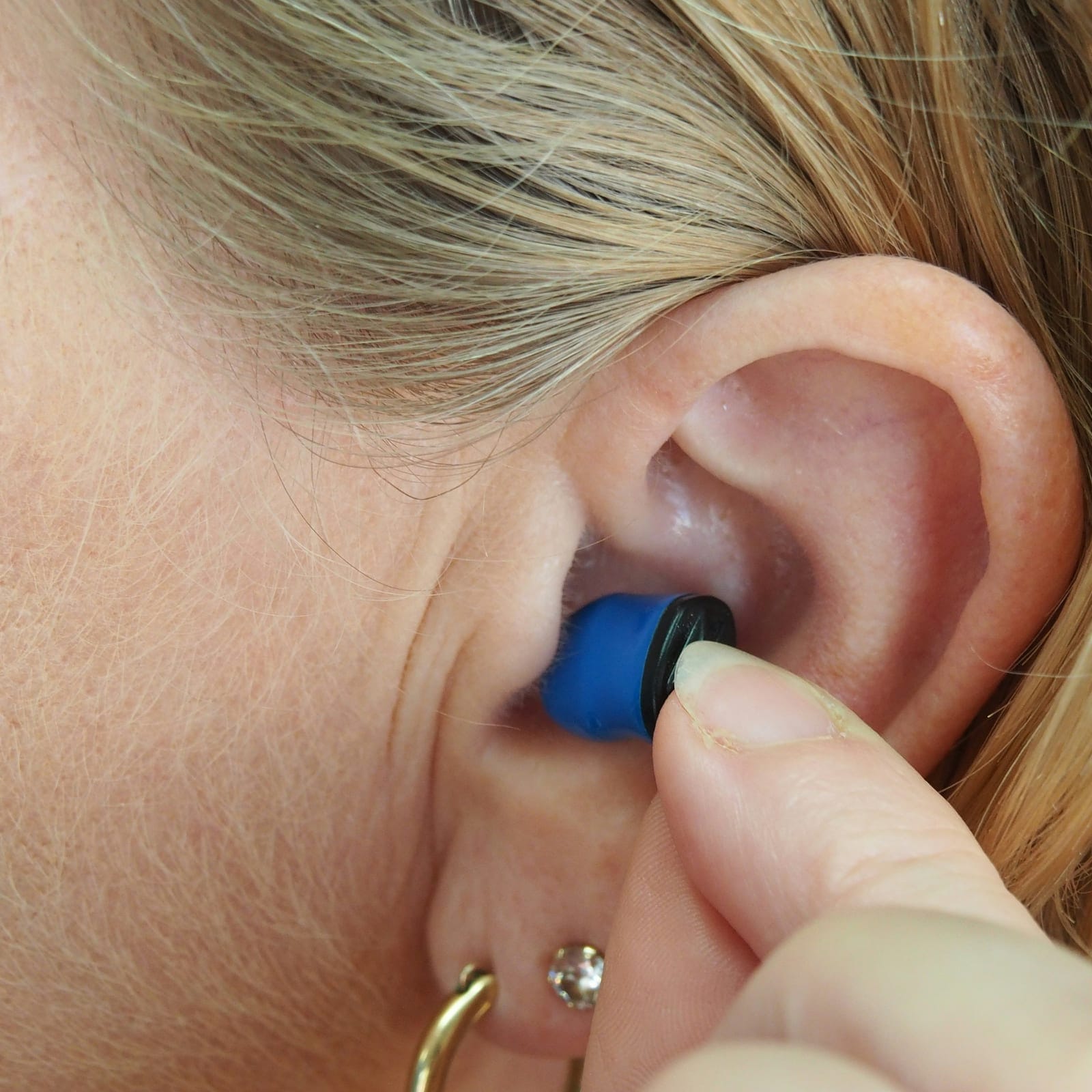
- Foam earplugs — rolled thin, inserted, and held in place while they expand to fill and seal the ear canal.
- Earmuffs — cups that cover the whole outer ear. Easy to put on and take off, so they suit noise that comes and goes. For noise of 100 dBA or more, NIOSH advises wearing earmuffs over earplugs.
- Custom moulds — made from an impression of your own ear. The UK charity RNID notes that the better fit should reduce noise more effectively and be more comfortable, and that they may last for several years.
Whichever you choose, check the rating: RNID suggests earplugs with a single number rating (SNR) of at least 20 dB, and warns that real-world protection is probably less than stated. Above all, wear it — NIOSH calls comfort the key to consistent use.
What should I know about noise at work?
NIOSH is clear that it is ultimately the employer’s responsibility to provide a safe working environment. Where hearing protection is needed, more is not always better: NIOSH warns that too much sound reduction can make workers less aware of their surroundings, and they may take their protectors off to hear properly. It suggests aiming for just enough reduction to bring exposure down to 75–85 dBA, and double protection — earmuffs over earplugs — where noise reaches 100 dBA or more. The World Health Organization (WHO) also advises taking breaks somewhere quiet, discussing the risk with your employer, and having your hearing checked every year.
What about concerts, motorsport, shooting and music?
Noisy pastimes add to your risk, and each has its own answer:
- Concerts and clubs — concerts reach 94–110 dBA. Wear earplugs, keep away from the loudspeakers, and rest your ears somewhere quiet for 10 minutes every hour.
- Motorsport — motorcycles and dirt bikes reach 80–110 dBA, and RNID lists motor sports among the activities that call for hearing protection.
- Shooting — a gunshot can cause immediate, permanent hearing loss. Shooting earplugs allow normal hearing at safe levels but reduce sudden, high-intensity sounds such as gunshots; some are electronic.
- Playing music — most standard earplugs reduce high pitches more than low ones. Musician earplugs use acoustic filters, so music is heard at normal but safe levels and keeps its sound quality; NIOSH notes that reducing noise equally across all frequencies preserves the fidelity of the sound.
Do swimmers need ear protection?
Yes — from water rather than noise. Swimmer’s ear, a bacterial infection of the outer ear canal, is typically caused by water that stays in the canal for a long time, wearing down protective wax and skin and letting bacteria multiply. The US Centers for Disease Control and Prevention (CDC) advises keeping ears as dry as possible with a bathing cap, earplugs or custom-fitted swim moulds, drying them well afterwards, and never putting cotton buds or other objects into the ear canal. A swimming plug is not a noise protector: RNID notes that many earplugs designed for swimming do not protect effectively against damaging noise. See a doctor about ear pain or discharge.
Which custom moulds does the Centre make?
We take an impression of your ear and make each mould in our own laboratory in Abu Dhabi:
- Noise-protection moulds — for industry, construction, aviation and shooting
- Musician moulds — reducing volume without dulling the music
- Swimming moulds — keeping water out
- Sleep moulds — for rest in noisy surroundings
If you work in noise, or have been around it for years, book a hearing test as well. A hearing test does not prevent hearing loss. Finding it early is what protects you.
Frequently asked questions
How do I put foam earplugs in properly?
Roll the earplug between your thumb and forefinger to compress it, pull your ear up and back with your other hand, then insert it and hold it with your finger until it expands and sits securely. WHO notes that correctly inserted earplugs can reduce sound exposure considerably.
Can I use cotton wool instead of earplugs?
No. RNID says ordinary cotton wool is not recommended for hearing protection. Use earplugs or earmuffs made to reduce noise, and if you have none, move away from the source.
Sources
- Provide Hearing Protection — National Institute for Occupational Safety and Health (NIOSH), CDC
- Noise-Induced Hearing Loss — National Institute for Occupational Safety and Health (NIOSH), CDC
- Choosing the right hearing protection — RNID
- Noise-Induced Hearing Loss (NIHL) — National Institute on Deafness and Other Communication Disorders (NIDCD), NIH
- Preventing Swimmer’s Ear — Centers for Disease Control and Prevention (CDC)
- Deafness and hearing loss: Safe listening — World Health Organization
This article is general information, not a diagnosis. For advice about your own hearing, book an assessment.