
What is the ringing in my ears, and what actually helps?
Tinnitus is hearing ringing, buzzing or hissing with no outside source. It is a symptom, most often linked to hearing loss. There is no proven cure, but cognitive behavioural therapy, sound therapy and, where hearing is reduced, hearing aids can help. Emirates Audiology Centre in Abu Dhabi and Al Ain offers tinnitus assessment and Tinnitus Retraining Therapy.
Published Next review
What is tinnitus?
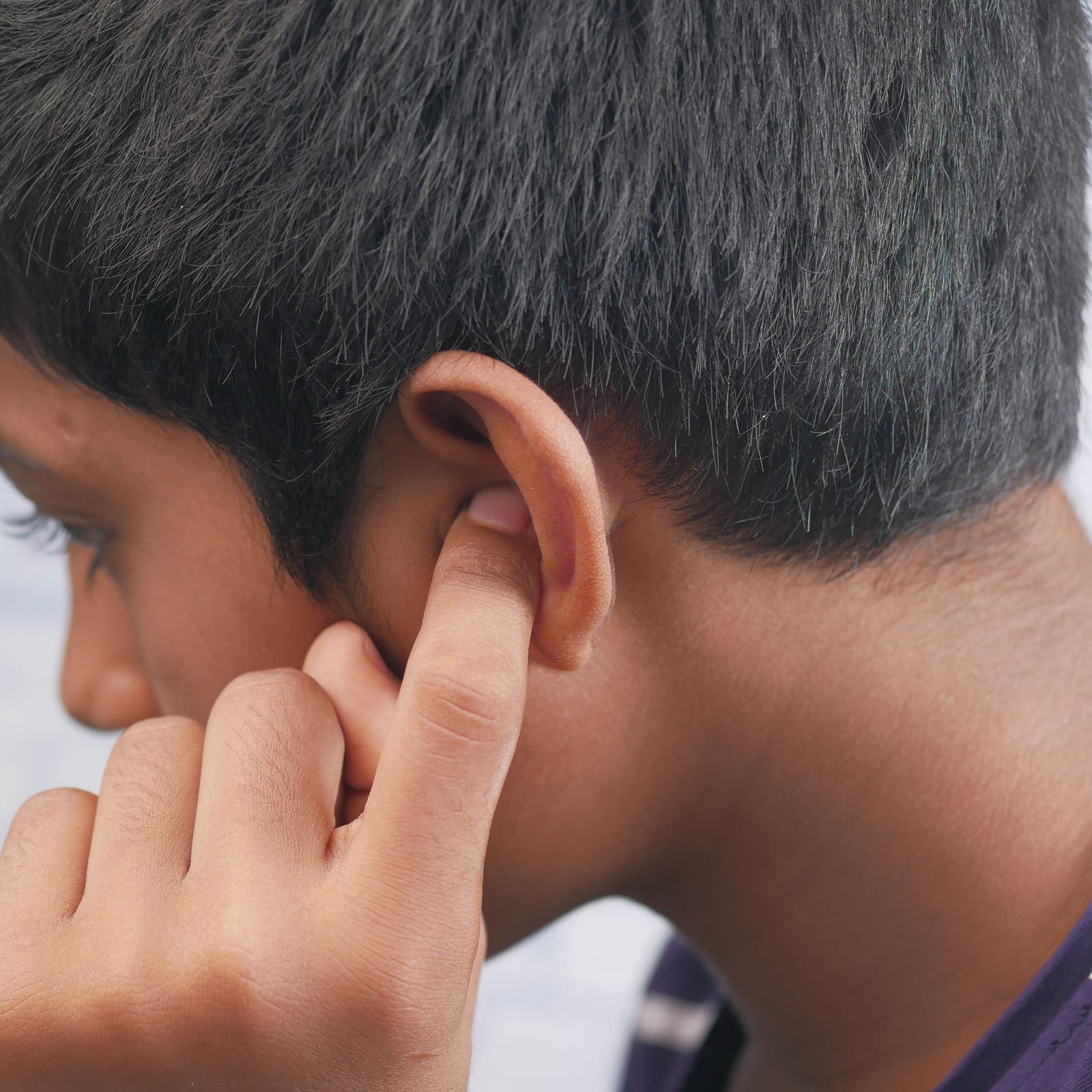
Tinnitus is hearing a sound that does not come from outside you. People describe it as ringing, buzzing, hissing, whooshing or humming, and some hear something closer to music. It can be in one ear, in both, or inside the head, and it may be constant or come and go. It is common, and it is a symptom rather than a disease. When it comes with emotional distress, the World Health Organization calls it “tinnitus disorder”. Tinnitus is not usually a sign of anything serious, but it is always worth having checked.
What causes tinnitus?
It is not always clear what causes tinnitus, but it is often linked to:
- Hearing loss, especially age-related or noise-related hearing loss — although tinnitus can also occur when hearing is normal
- Exposure to loud sound, which can damage hair cells in the inner ear
- Ear infections or a build-up of earwax
- Some medicines, including some chemotherapy medicines, antibiotics, anti-inflammatory painkillers and aspirin
- Ménière’s disease, conditions such as diabetes or thyroid disorders, and head or neck injuries
Research has not found a clear causal link between stress and tinnitus, but stress can make it worse, as can loud noise. Silence makes it more noticeable, which is why many people notice it most at night.
What actually helps?
Most approaches aim to draw your attention away from the sound and calm your reaction to it, rather than switch it off. The main options, and what the evidence says about each:
- Hearing aids, if you have hearing loss. Making outside sound clearer can make tinnitus less noticeable, and NICE, the UK’s National Institute for Health and Care Excellence, recommends offering them to people with tinnitus whose hearing loss affects communication.
- Cognitive behavioural therapy (CBT). A talking therapy, delivered by psychologists online, in groups or one to one, that changes how you think about and respond to the sound. NICE recommends considering it for adults whose tinnitus still affects their wellbeing or daily life after initial support.
- Tinnitus Retraining Therapy (TRT). A structured programme that combines sound therapy with directive counselling over a course of sessions, to retrain the brain to tune the sound out. TRT is regarded as safe, but research on it is limited and mixed, and the NHS notes that it is unclear whether it works for everyone.
- Sound therapy. Soft music or other gentle background sound can distract from tinnitus and make it easier to fall asleep. The evidence for it is limited, but some people find it useful.
- Information and support. NICE recommends explaining tinnitus and agreeing a plan with you at every stage of care, which is sometimes called tinnitus counselling. Relaxation, a regular sleep routine and support groups can also help you cope.
Which treatments lack good evidence?
Tinnitus attracts a lot of promises. Be cautious about:
- Medicines to cure tinnitus. The World Health Organization says no medicine has yet been shown to be effective for it, and NICE advises that betahistine should not be offered to treat it.
- Supplements such as ginkgo biloba, zinc and melatonin. A US clinical guideline, cited by the American Tinnitus Association, advises doctors not to recommend dietary supplements for persistent tinnitus.
- Pills sold online with promises of relief. The American Tinnitus Association warns that the internet is full of misleading claims.
- Hearing aids when hearing is normal. NICE advises against offering them to people with tinnitus who have no hearing loss.
If you already take a medicine for another condition, do not stop it without speaking to the doctor who prescribed it.
When should tinnitus be checked quickly?
Most tinnitus is not an emergency, but these situations need prompt attention:
- Tinnitus with sudden hearing loss, a spinning sensation (vertigo) or weakness in the face — go to an emergency department straight away
- Tinnitus after a head injury — seek emergency care
- Tinnitus that beats in time with your pulse — ask for an urgent appointment with a doctor
- Tinnitus in one ear only — have it assessed promptly
- Tinnitus that is affecting your sleep, concentration or mood — see a doctor or audiologist, and if you ever have thoughts of harming yourself, get urgent help straight away
Sudden hearing loss in one ear is urgent even without tinnitus: treatment works best when it starts early.
What happens when you come in with tinnitus?
We start with a full hearing assessment, because tinnitus and hearing loss so often go together. It takes around an hour, it is completely painless, and we explain the results at the same visit. From there, the plan depends on what we find: counselling, Tinnitus Retraining Therapy, a hearing aid, or a referral to a doctor or ENT specialist if something needs medical attention. Not every case disappears. Almost every case improves. You do not need a referral to book at our Abu Dhabi or Al Ain clinic — call 02 631 9599.
Frequently asked questions
Can tinnitus go away on its own?
It can, especially when it follows something temporary such as an ear infection or a short burst of loud noise, and tinnitus caused by earwax can ease once the wax is removed. Tinnitus that has lasted more than three months is less likely to go away, but it can still be managed effectively.
Will tinnitus make me lose my hearing?
No. Tinnitus itself does not cause hearing loss, although both can come from the same damage to the ear. It can make outside sounds harder to focus on, which may feel like poorer hearing — a hearing test will show which it is.
Do I need to give up coffee?
Not necessarily. Research has not settled whether caffeine affects tinnitus, but avoiding coffee and alcohol in the evening can help you sleep.
Sources
- Deafness and hearing loss: Tinnitus — World Health Organization
- Tinnitus: assessment and management (NG155) — Recommendations — National Institute for Health and Care Excellence (NICE)
- Tinnitus — NHS
- Tinnitus Retraining Therapy (TRT) — Tinnitus UK (formerly the British Tinnitus Association)
- Sound therapy (sound enrichment) — Tinnitus UK (formerly the British Tinnitus Association)
- Is There a Magic Pill? Medications and Tinnitus — American Tinnitus Association
This article is general information, not a diagnosis. For advice about your own hearing, book an assessment.